
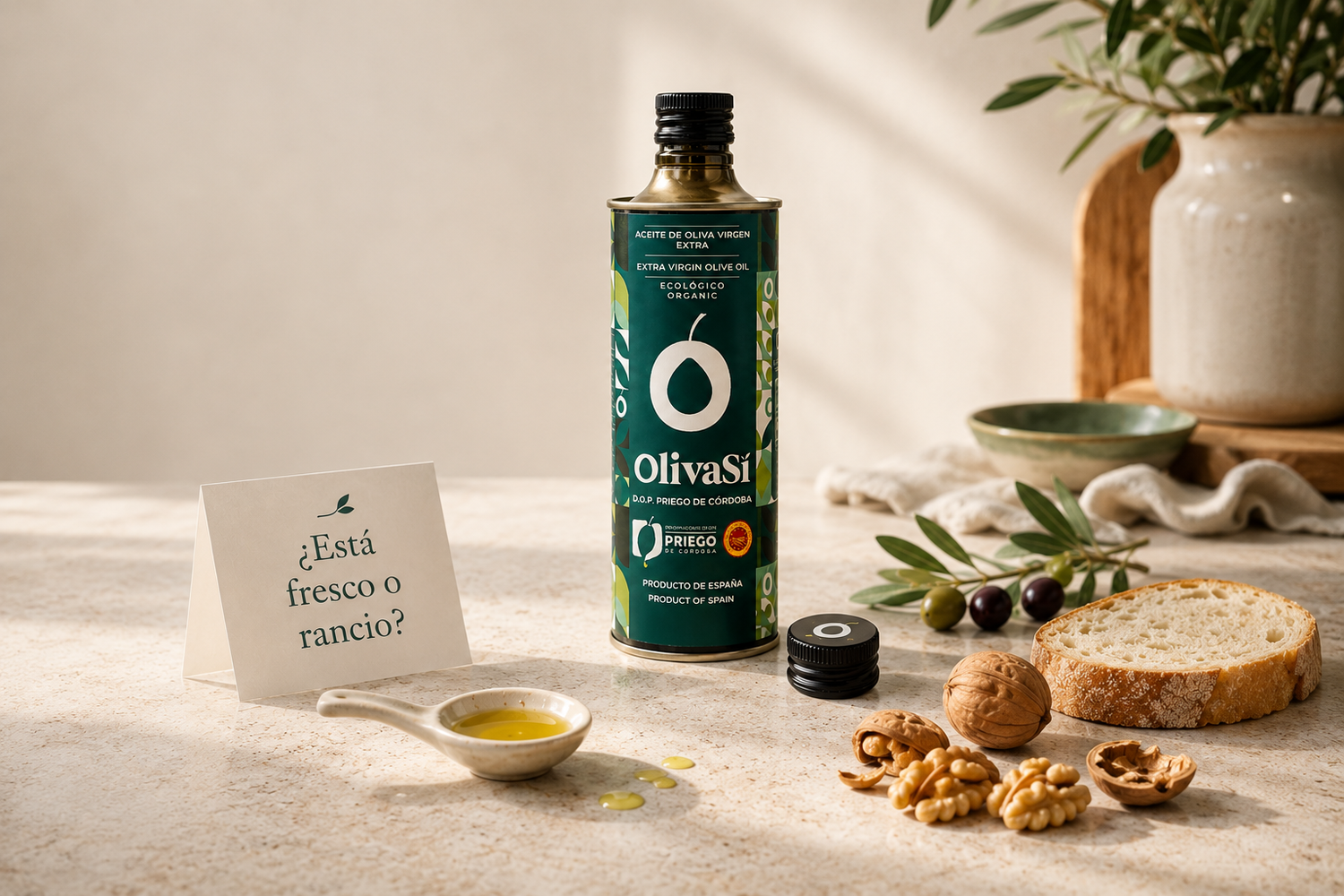
The 10-second key: "bad" oil is detected by nose and mouth
When oil goes bad, the first thing to decline is not the color: it's the aroma and flavor. The most common defect is rancidity, which appears due to an oxidation process (prolonged contact with air).
What rancid oil smells and tastes like (the tell-tale sign)
If you've ever smelled rancid nuts or "old grease," you're on the right track. In olive oil, rancidity is often described as a varnish/solvent smell or "freshly painted room," with a sweet-chemical note when pronounced.
Quick home test to confirm rancidity (30 seconds)
-
Pour 1 teaspoon into a small glass.
-
Cover it with your hand and warm it with your palm for 10–15 seconds.
-
Take a deep sniff and taste a drop.
If it smells like "varnish/old grease," it's not your imagination: it's rancidity.
The "other" defects people confuse with rancidity (and how to recognize them)
Here's what many blogs don't clearly explain: not everything bad smells rancid. There are typical defects that might sound like "weird oil":
-
Mold-dampness: appears when olives have had moisture and fungi/yeasts; the defect is associated with this humid preservation.
-
Fusty (fermented olive): related to fermentation due to storage/management of olives before milling; it's one of the defects that most "brings down" an oil.
-
Earthy: if olives with dirt/mud were milled and not washed, this characteristic "flavor" can appear.
-
Metallic: when the oil has been in improper contact with metal surfaces during processing or storage.
-
Grubby: associated with grease/mineral oil residues in poorly cleaned machinery.
Important: there are "weird" signs that do NOT mean it's bad
This helps avoid unnecessarily discarding oil:
-
Cloudiness / "clouds": can be due to cold (it thickens) or being unfiltered. It's not proof of a defect on its own.
-
Color: not a reliable indicator of quality/defect (varies by variety, filtering, and maturity).
What always matters is smell + taste.
What do I do if I think my oil is bad? (simple decision)
-
If it smells/tastes clearly rancid or moldy: discard it for raw consumption (and, if the defect is strong, it's better to throw it away).
-
If it's "flat" but not defective (just lost fruitiness): use it for hot cooking (stews/sautéing) and save a fresh one for salads/toast.
-
If in doubt: compare it with a freshly opened oil. The difference is usually obvious.
Why oil goes bad (and how to truly prevent it)
The 3 accelerators of deterioration are: air, light, and heat. Storing it properly completely changes the story.
How to store EVOO to prevent it from going bad (golden rule + 3 tips)
-
Dark + cool + well-sealed.
-
If you buy a large format: refill a small oil cruet for daily use and keep the main one sealed.
-
Avoid leaving it next to the hob/oven or on shelves with direct light.
Point of interest (for you reading this now): do the "comparative test" and find out in 1 minute
If you're unsure if your oil is rancid, the fastest way is to compare it with a freshly opened one (even from the supermarket).
-
Put two small glasses: your oil vs a new one.
-
Warm them with your hand for 10 seconds and smell.
-
Taste a drop of each.
If yours smells "dull" or like old grease/varnish and the new one smells fruity/green, you have your answer without further ado.
Frequently Asked Questions (SEO FAQ)
How to recognize rancid olive oil without being an expert?
With the glass test: warm with your hand, smell, and taste. If a varnish/old grease smell appears, it's rancid.
Can an oil be "bad" and not smell rancid?
Yes: it can have mold-dampness or fusty, which smell differently.
Does cloudiness mean the oil is bad?
Not necessarily. The real test is smell and taste.
How do I prevent my EVOO from going rancid?
Avoid air, light, and heat: store it in a cool, dark place and always well-sealed.
Can I cook with oil that is rancid or defective?
If the defect is clear (rancid/moldy), it's not worth it: the taste transfers to the dish and "contaminates" the food. If it's just flatter (without a bad smell), use it for hot cooking and save a fresh one for raw dishes.
Why does my oil taste strange if it's within its best-before date?
Because the best-before date doesn't "protect" against storage: if it has been exposed to light/heat or poorly sealed, its quality can degrade sooner. It also matters if the bottle has been open for a while and oxygen enters with each use.