
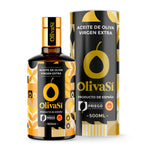
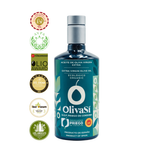
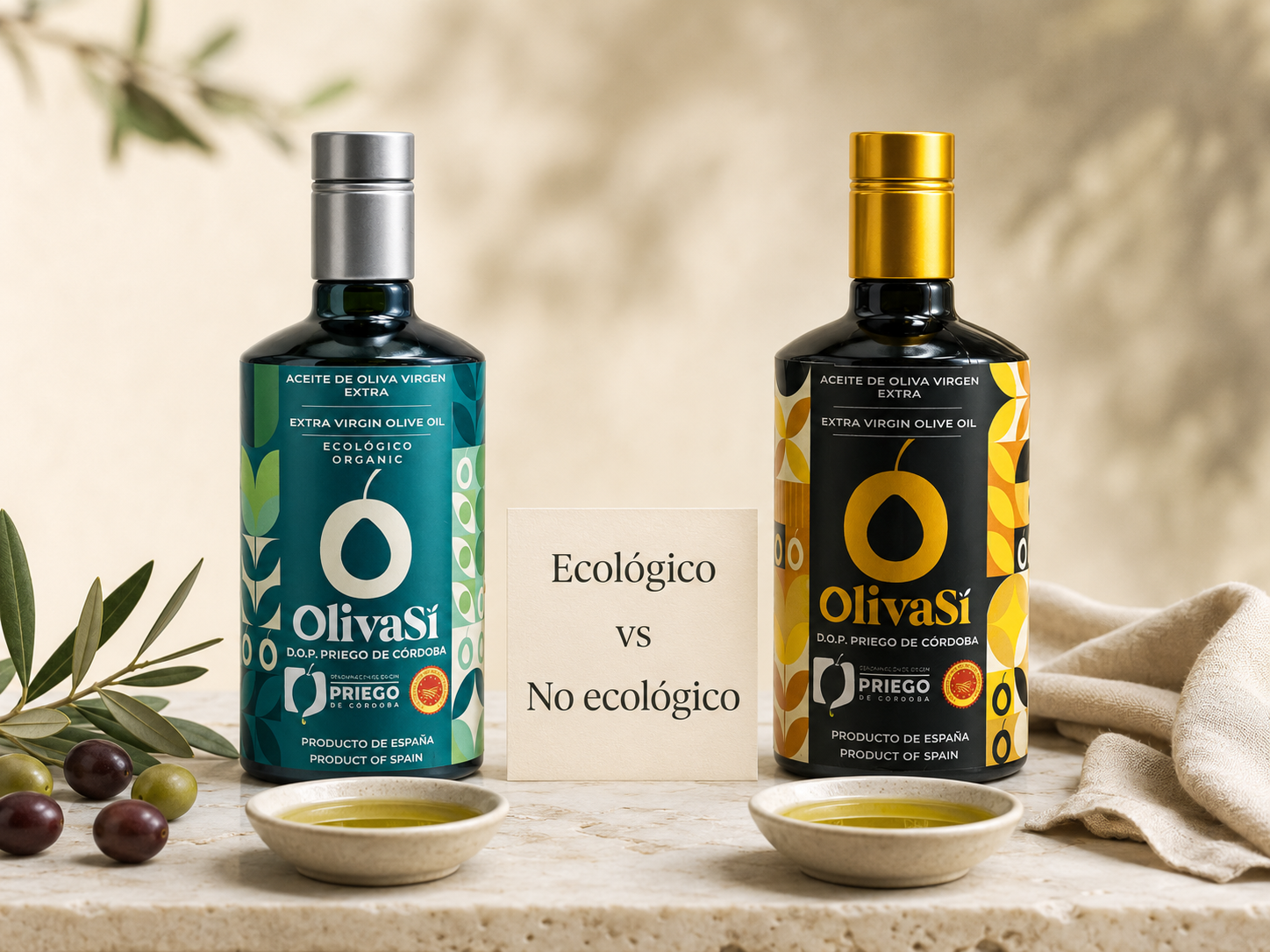
First of all: "organic" is not a quality category, it's a type of production
An EVOO can be organic or non-organic, but in both cases, it's still EVOO if it meets extra virgin requirements.
The "organic" label refers to the cultivation and its certification; the final quality (aroma/flavor/freshness) depends on the specific oil.
What changes in the olive grove: practices and limits (what people actually buy)
In organic farming, the focus is on prioritizing:
-
Fertilization and pest control with strategies permitted under organic regulations.
-
Greater emphasis on practices such as cover crops, soil management, and mechanical/biological control, depending on the case.
-
An auditing/registration system (supply chain traceability) to be able to sell it as organic.
Practical translation: you buy "organic" mainly for the certified production model.
Certification: how to verify it without a doubt (and avoid "greenwashing")
"Truly" organic products usually display:
-
EU organic logo (leaf).
-
Control body code (essential).
-
Indication of raw material origin ("EU/non-EU agriculture" or country).
If these are missing, it is not an official organic certification.
Differences in flavor: the honest truth (and what is often exaggerated)
-
There is no universal rule: organic doesn't automatically mean "tastier."
-
There can be very aromatic organic EVOOs and others that are milder; the same applies to non-organic ones.
-
What most influences flavor is usually: variety, harvest time, processing, freshness, and storage.
If you want to "always get it right": prioritize fresh oil + good packaging + good aroma when opened.
Does organic olive oil have more polyphenols?
It can have high or low levels, just like non-organic oil. Polyphenols depend heavily on:
-
variety
-
olive ripening
-
climate/year
-
extraction
-
conservation
So organic ≠ more polyphenols automatically. (Many competitors over-promise here.)
Price: why it usually costs more (and when it's worth it)
Organic EVOO usually has a higher price due to:
-
more demanding olive grove management in terms of practices and monitoring
-
certification and control costs
-
in some cases, lower yield or more work in the field
Is it worth it?
-
Yes, if your priority is to support the organic model and certification.
-
It depends, if your main priority is "better flavor per euro": in that case, the EVOO that is freshest and best made wins, whether organic or not.
Residues and "chemical-free": how to understand it without slogans
"Organic" doesn't mean "zero chemicals" as a simplistic phrase: it means regulations, permitted/restricted substances, and control.
Organic purchasing is usually linked to a preference for a type of agriculture and a verifiable seal, rather than absolute promises.
What matters more than "organic vs. non-organic" (and almost no one highlights it)
If you want a truly top-notch EVOO, look for:
-
Freshness (packaging/harvest date if shown)
-
Light-protected packaging
-
Home storage (dark, cool, well-sealed)
-
Aroma when opened (clean fruity, no strange notes)
These 4 points influence the actual experience more than the "organic" label alone.
Which to choose based on your use (quick decision)
-
Raw (salads, toast, finishing dishes): choose the one that smells and tastes best and is freshest.
-
Daily cooking (stews/stir-fries): organic or non-organic according to your priority; here the aromatic nuance is less noticeable.
-
Gourmet gift: organic adds value for its "story" and perception, but packaging + freshness + origin are paramount.
Frequently asked questions
Are organic EVOO and "regular" EVOO processed differently at the oil mill?
The basis is the same: mechanical extraction. The main difference lies before that: how the olives are produced and certified.
Does organic mean the olive grove uses nothing for pests?
Not necessarily. It means that methods and products permitted by organic regulations are used, under control.
Which is better for children or family: organic or non-organic?
The important thing is that it is extra virgin, fresh, and well preserved. Organic adds the factor of a certified "production model," if you value it.
How do I avoid overpaying for an "organic" product that isn't?
Always look for: EU logo + control body code + origin on the label.