
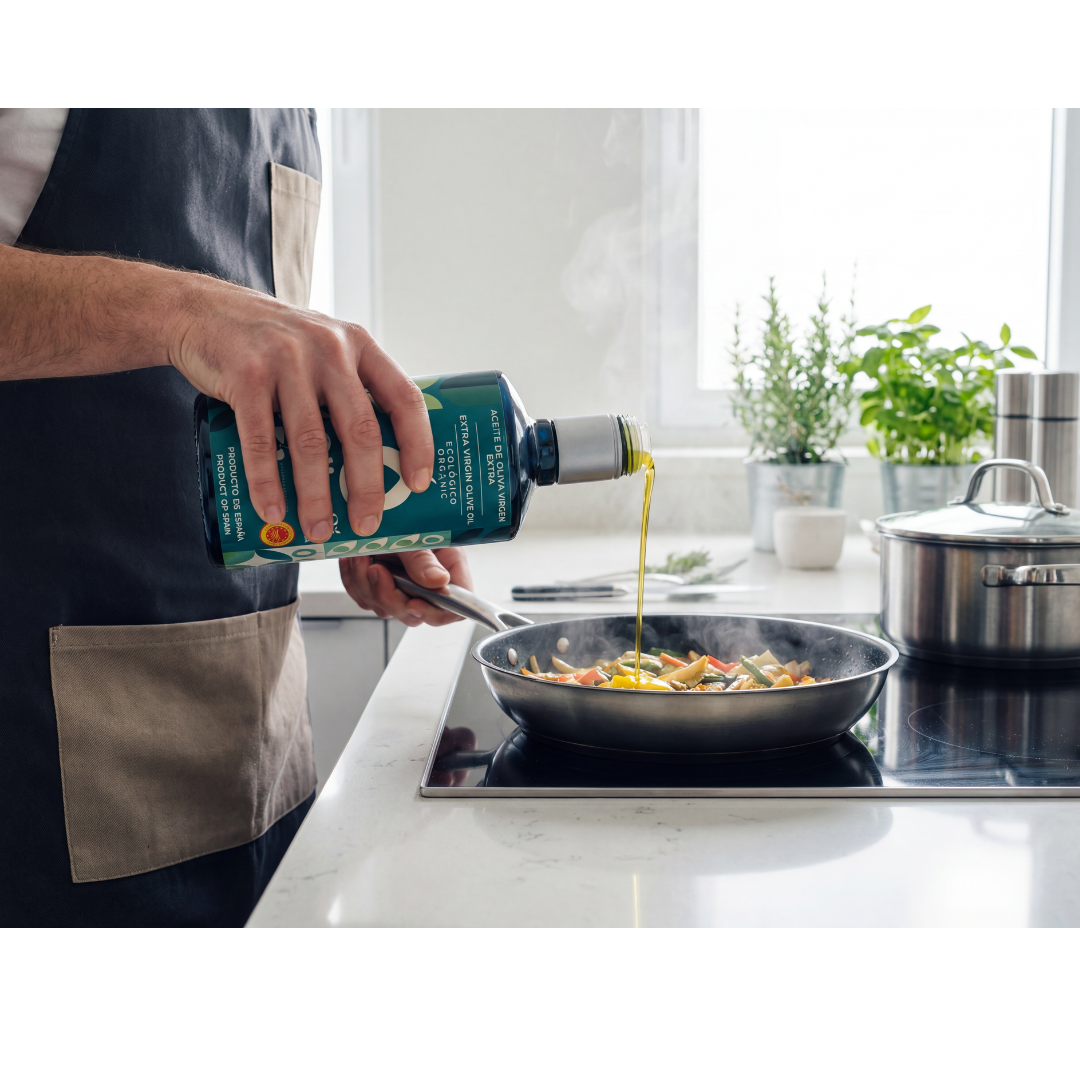
Why is it so important to use extra virgin olive oil properly in cooking?
Extra virgin olive oil (EVOO) is one of the best allies you can have in the kitchen: it adds flavor, it's healthy, and it makes even a simple slice of toast with tomato taste like it came from a restaurant. But it's also very easy to make mistakes with extra virgin olive oil without realizing it: temperature, reuse, storage, choosing the right one at the supermarket…
At Oliva Sí we tell you about the most common mistakes and, above all, how to avoid them to get the most out of your EVOO.
1. Why using extra virgin olive oil correctly makes a difference
The first thing is to understand what you have on your hands:
-
Extra virgin olive oil is the highest quality olive juice, without defects, obtained solely by mechanical processes.
-
Plain “olive oil” usually includes refined oils mixed with some virgin or extra virgin oil.
Using EVOO correctly matters because:
-
It better preserves its flavor: fruity aromas, balanced bitterness and spiciness.
-
You retain its healthy properties, such as antioxidants.
-
You get more out of it: it performs better and withstands cooking better than other oils, if you treat it well.
In Oliva, we see it in every tasting:
When someone goes from using EVOO "without thinking" to using it properly, home cooking takes a leap forward.
2. Mistakes when cooking with extra virgin olive oil
The frying pan or the pot is where extra virgin olive oil is most often (unintentionally) mistreated. These are the most common mistakes when cooking with it.
Frying with very little oil and burning it due to excessive temperature
One of the classic mistakes is frying with a minimal layer of oil "to save money." The result is usually the opposite of what you want:
-
The food doesn't seal properly and absorbs more fat.
-
The texture becomes less crispy and heavier.
For optimal frying with extra virgin olive oil, the food should be almost completely submerged, and you should fry in small batches to maintain a consistent temperature. Afterwards, drain it well on paper towels.
At the other extreme, we have the mistake of heating the oil until it smokes. When extra virgin olive oil starts to smoke, it's a sign that you've overheated it: its compounds degrade, it loses properties, and the flavor becomes bitter and burnt.
A simple rule:
-
Heat the oil over medium heat, not at maximum from the beginning.
-
Test it with a small piece of bread or the food itself: if it bubbles happily, without exploding or smoking, you're at a good point.
Reusing extra virgin olive oil without control and using it only for salads
Reusing extra virgin olive oil isn't inherently bad, but doing so without proper oversight is. Some common mistakes include:
-
Use the same oil over and over again until it is very dark and thick.
-
Mix fried fish, sweets and strong batters in the same pan.
-
Do not strain the oil when finished, leaving crumbs and residue that will burn the next time you use it.
How to do it better:
-
Let it cool and filter the oil through a fine sieve or cheesecloth.
-
Reserve a separate oil for each type of frying (for example, just potatoes or just vegetables).
-
If it smells strange, is very dark, or seems thick, it's time to change it.
Another very common mistake is thinking that extra virgin olive oil is "only for salads" and using other, less desirable oils for cooking. In reality, extra virgin olive oil is one of the most heat-stable oils, perfect for frying, sautéing, and stewing when used at the right temperature. Our recommendation is clear: if you have the choice, make extra virgin olive oil your go-to oil for both raw and cooking.
Always use the same oil for everything regardless of the variety
Not all extra virgin olive oils taste the same. Thinking that "an EVOO is an EVOO" means missing out on many possibilities:
-
There are milder EVOOs, ideal for mayonnaise, white fish, delicate vegetables or baking.
-
Others are more intense, perfect for toast, meats, tomatoes, stews, or for letting the oil take center stage.
What we often do in tastings is propose a "core selection" of EVOO:
-
A mild one for beginners or for dishes where the oil complements the dish.
-
A more powerful one for lovers of intense flavor and dishes with character.
With just that change, people often say:
"It wasn't that I didn't like extra virgin olive oil... it's that I wasn't using the right one for each dish."
3. Mistakes when storing and choosing extra virgin olive oil
Not everything happens in the pan: where you store the EVOO and how you buy it also makes a big difference.
Poor storage conditions: heat, light, air, and time
Four clear enemies of extra virgin olive oil:
-
Heat: Leaving the bottle next to the fire, the oven, or on a hot countertop accelerates oxidation and shortens its lifespan.
-
Light: Keeping the oil in the sun or on a very bright shelf deteriorates its antioxidants and aroma.
-
Air: poorly closed caps, open oil cans and containers that are constantly being refilled cause the oil to go rancid faster.
-
Time: EVOO does not "expire" suddenly, but it does lose freshness and nuances over the months, especially once opened.
Simple tips for properly preserving your extra virgin olive oil:
-
Store it in a cool, dry, dark place (closet or pantry).
-
Choose dark or tin containers, and always close the cap tightly.
-
If you use oil dispensers, make sure they are opaque and that they are emptied and washed from time to time.
-
Buy sizes that match your monthly consumption and check the best before date.
Making the wrong choices at the supermarket: focusing only on the price or on whether it's "very spicy"
When you go to buy oil, it's easy to make several mistakes:
-
Confusing categories: “olive oil” is not the same as “extra virgin olive oil.” If you're looking for quality, make sure the label clearly states EXTRA VIRGIN.
-
Don't just focus on the price: price matters, but it's also worth considering origin, variety, packaging type, and expiration dates. Sometimes a small price difference makes a big difference to the cooking experience.
-
Misinterpreting acidity: The acidity listed on the label is a chemical value, not what you feel in your throat. A well-balanced spiciness and bitterness are usually a sign of fresh, high-quality extra virgin olive oil, not "high acidity."
In short: take a few seconds to read the label, not just the big price tag. It's the easiest way to ensure you're bringing home an oil worthy of your dishes.
4. Quick guide Oliva Sí to using your EVOO properly
If you want a shorter version, here's a short checklist:
For cooking:
-
Always choose extra virgin olive oil.
-
Use enough oil when frying; avoid the "minimal layer".
-
Don't let the oil smoke: turn down the heat.
-
Filter the used EVOO and reuse it only a few times.
-
Experiment with different varieties depending on the type of dish.
To store and buy:
-
Store the oil away from heat and direct light.
-
It prefers dark or tin containers, tightly sealed.
-
Buy the size you'll actually use in a few months.
-
Make sure the label says "extra virgin" and check the origin, variety, and dates.
Quick questions about mistakes with extra virgin olive oil
How many times can I reuse extra virgin olive oil for frying?
For clean frying and if it hasn't burned, you can reuse it 2-3 times by filtering it well. If it's very dark, smells strange, or has become musty, it's best not to continue using it.
Can I use the same extra virgin olive oil for frying and for salads?
Ideally, the oil used for dressings and raw consumption should always come from a clean, fresh bottle. Oil that has already been used for frying is best reserved for cooking again.
Where is the best place to store olive oil at home?
Store in a cool, dry, and dark place, away from the stovetop and oven. A small bottle on the countertop is fine, as long as the rest of the oil is stored in a cupboard or pantry.
Conclusion
Avoiding a few mistakes —not frying with too little oil, not burning it, reusing it wisely, storing it away from light and heat, and always choosing quality extra virgin olive oil— completely changes the outcome of your dishes.
If you treat your EVOO well:
-
Your recipes gain flavor and texture.
-
You truly reap its benefits.
-
And it makes perfect sense to opt for a premium extra virgin olive oil like Oliva Sí for your everyday life.