

Polyphenols in EVOO: The key that makes the difference between a normal oil and a premium one
When talking about EVOO, one of the key factors that makes the biggest difference is polyphenols. These are natural compounds present in olives that influence the oil's stability, part of its antioxidant profile, and also sensations like bitterness and pungency. That's why an extra virgin oil with personality not only tastes better, it also tends to better express its quality.
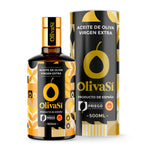
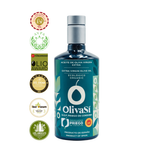
At Oliva Sí, we like to explain this point simply: a good oil not only "goes down smoothly," it also has life, aroma, and character. In our EVOO PDO Priego de Córdoba, with a coupage of Hojiblanca, Picuda, and Picual, we seek precisely that balance between freshness, green notes, almond, and a slightly spicy finish.
What are the polyphenols in extra virgin olive oil?
Polyphenols are bioactive compounds present in EVOO because it is obtained only by mechanical procedures, without refining. They are not the same as oleic acid: oleic acid is the main fat in oil, while polyphenols are part of its minor compounds with antioxidant activity.
This helps explain why not all oils are the same. Two bottles may be "olive oil," but a well-made and well-preserved extra virgin oil maintains these compounds better and, with them, a good part of its sensory and differential value.
What are the benefits of EVOO polyphenols?
Here it is appropriate to separate serious information from marketing. The health claim authorized by the European Union states that olive oil polyphenols contribute to the protection of blood lipids from oxidative stress, provided that the oil provides at least 5 mg of hydroxytyrosol and its derivatives per 20 g of oil, and that this effect is obtained with a daily intake of 20 g.
In addition, polyphenols are related to the stability of the oil and to sensory attributes such as bitterness and pungency. Practically speaking, it helps explain why some EVOOs feel more alive, fresher, and more complex than others.
How to know if an olive oil has many polyphenols
You can't know for sure just by tasting it, but there are very useful clues. An EVOO with green fruitiness, balanced bitterness, and a clean spicy finish usually points to a more interesting phenolic profile than a flat or dull oil. Research links these sensations to the phenolic profile, although analysis remains the most precise way to confirm it.
What the brand explains also matters a lot. If it talks about polyphenols, it should be able to back it up with real decisions: early harvest, variety, production process, freshness, and packaging that protects the oil. At Oliva Sí, this logic is present both in the origin and in the format: we work with PDO Priego de Córdoba, early harvest, and tin, which better protects the oil from light.
What influences the polyphenol content
The phenolic content changes depending on the olive variety, harvest time, extraction, and preservation. Light, oxygen, and temperature also influence it: the worse the oil is stored, the easier it is for it to lose some of its qualities over time.
That's why it's not enough to buy a good EVOO; you also have to treat it well at home. Storing it in a cool place, away from light, and tightly sealed helps preserve its profile better. That's one reason why at Oliva Sí we place so much value on formats that protect the content, not just the aesthetics of the packaging.
How to choose an EVOO rich in polyphenols
The best purchase doesn't start with a slogan, but with concrete signals. Look for an extra virgin oil with a clear origin, a recent campaign, protective packaging, a well-described sensory profile, and a brand that explains how it processes its oil. If it also offers analytical data, even better.
From our point of view, a premium EVOO must demonstrate consistency: good fruit, good elaboration, careful preservation, and a flavor that confirms it. At Oliva Sí, this consistency translates into a coupage designed to offer complexity, freshness, and a lively finish, especially enjoyable raw or at the end of cooking.
Conclusion
The polyphenols in extra virgin olive oil are one of the key factors that best explain the difference between a decent oil and an EVOO with true personality. Important for stability, for its antioxidant profile, and also for its flavor. But the important thing is not to repeat the word "polyphenols," but to understand what lies behind it: origin, harvest, process, preservation, and a coherent sensory experience.
At Oliva Sí, we defend precisely this idea: a great oil doesn't need to exaggerate, it needs to be well made. And when it is, it shows in the aroma, in the balance, and in that green and slightly spicy touch that makes it clear that you are dealing with a true extra virgin oil.
Frequently Asked Questions
Does pungency mean the oil has more polyphenols?
It's a good clue, but not definitive proof. Taste guides; analysis confirms.
What health benefit is legally supported?
The protection of blood lipids from oxidative stress, under the conditions set by the EU.
Are polyphenols lost if the oil is poorly preserved?
Yes. Light, oxygen, and heat accelerate oil deterioration.