
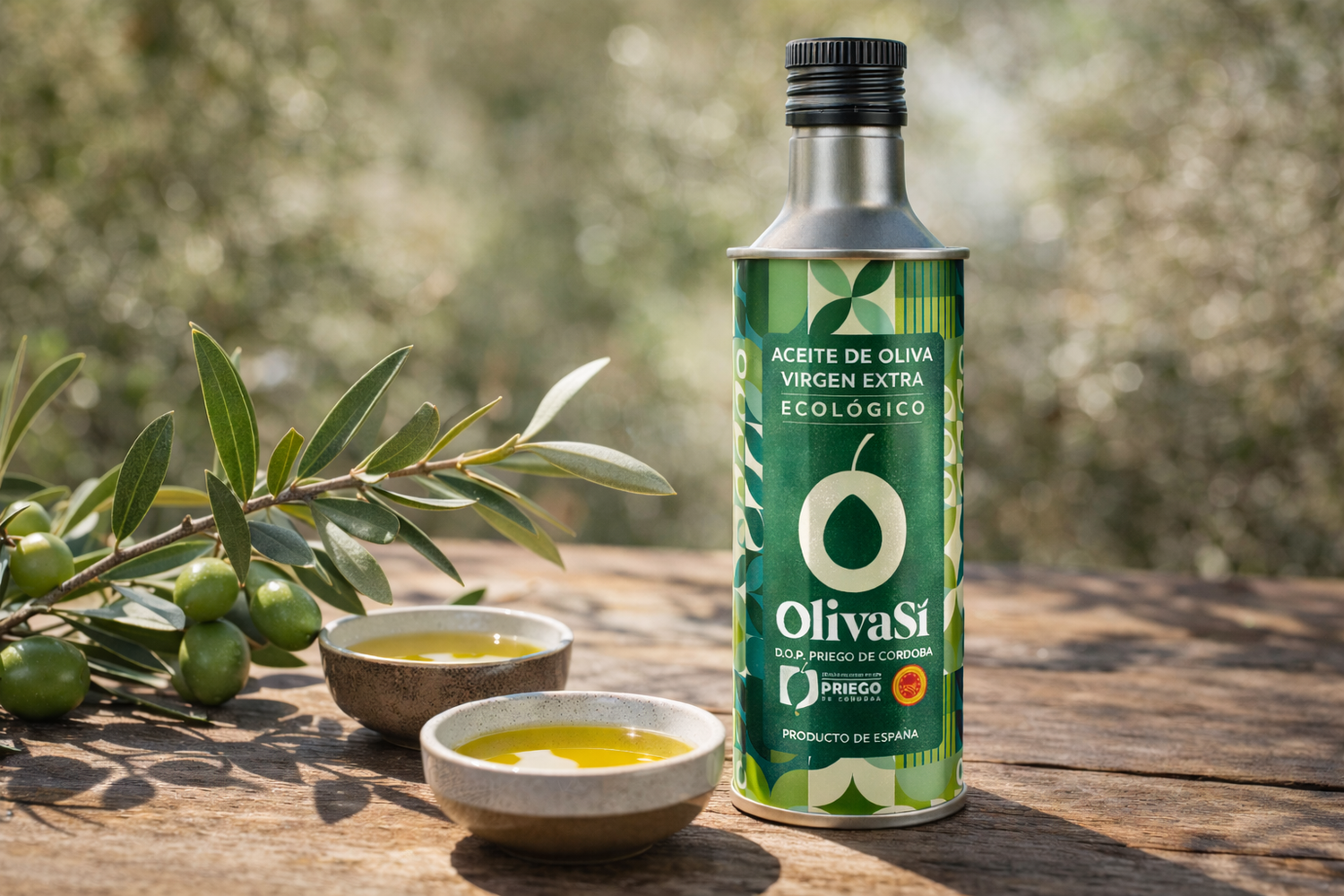
The most common questions about extra virgin olive oil
If you have a thousand questions about extra virgin olive oil and none of them feel like answering them, we'll answer them here without technical jargon.
At Oliva Sí, we live surrounded by extra virgin olive oil: we sell it, serve it at the table, and personalize bottles for weddings, baptisms, communions, restaurants, hotels, and businesses. These are the most frequently asked questions.
1. Basic concepts
What exactly is extra virgin olive oil?
It is olive juice obtained solely by mechanical means (without chemicals) and of such high quality that it has no taste defects.
In summary:
-
Only healthy, pressed olives.
-
Without "fixes" in the laboratory.
-
Clean taste and aroma of fruit, grass, tomato, almond…
It is the highest category of olive oils.
How is "normal" olive oil different?
It's not the same, even though it sounds similar:
-
Extra virgin olive oil (EVOO): olive juice, without defects, unrefined.
-
Olive oil (plain and simple): mixture of refined (chemically treated) oil with some virgin/extra virgin.
Cheap bottled "olive oil" is usually blander and lacks character. If you want quality at home, in your restaurant, or as a gift, go for extra virgin.
2. Flavor, acidity, and how to tell if it's good
Why does extra virgin olive oil taste spicy or bitter?
Because it's good and it's alive 😄
In a good EVOO:
-
Bitterness and spiciness are a sign of antioxidants and freshness.
-
The worrying thing is that it smells rancid, like vinegar or damp.
That's why in Oliva Sí we say:
Good extra virgin olive oil has personality: if it doesn't make any noise in your mouth, it's not for you.
What is acidity and what number should I look at?
Acidity is NOT the same as sour taste. It is a chemical property that indicates the state of the olive when it was milled.
-
An EVOO should be below 0.8º.
-
Many high-end oils are at 0.2–0.3º.
But be warned: 0.2% alcohol doesn't guarantee you'll like it more than 0.4%. What matters most is the grape variety, the harvest, and the winemaking process, not just the number.
How can I tell if an olive oil is good without being an expert?
Quick guide:
-
Label
-
It should say “extra virgin olive oil”.
-
It's best if it indicates origin, variety, and harvest.
-
Container
-
Dark glass or tin is better, as it provides better protection from light.
-
Nose and mouth
-
It smells like fruit, grass, tomato… good.
-
It smells strange or rancid… a bad sign.
You don't need to be a taster, just pay a little attention.
3. Storage, expiration date and daily use
Does extra virgin olive oil expire?
It doesn't "go bad" suddenly like milk, but it loses quality over time:
-
Aromas and flavors fade.
-
It can become rancid if years pass or if it is not properly stored.
Use the best before date as a reference and, above all: 👉 Don't save good oil "for some eternal special occasion". Use it.
How should we store extra virgin olive oil?
Its enemies: light, heat, and air.
-
Store it in a cool, dark place.
-
Close the bottle tightly.
-
If you buy a large jug, transfer it to smaller bottles.
Typical mistakes: bottle next to the hob, in the sun on the countertop, always open.
Can you fry it with extra virgin olive oil?
Yes, it's possible, and it holds up well to frying if you don't burn it or reuse it a thousand times.
At home, it's a good option. However, if you want to use your premium extra virgin olive oil only for frying potatoes… we would reserve it for:
-
Tomato with salt and oil.
-
Vegetables, meats or fish finished raw.
-
Bread and snacks.
Does extra virgin olive oil make you gain a lot of weight?
Like any oil, it has quite a few calories, but it is a healthy fat within a balanced diet.
For guidance only:
-
Between 2 and 4 tablespoons a day can fit well into a normal diet, depending on your activity and your other fats.
The key: make it your main fat and don't then add butter, heavy sauces and pastries like crazy.
4. Health, beauty and lifestyle
What are the main benefits of EVOO?
In short:
-
Good for the heart and arteries.
-
It fits perfectly into the Mediterranean diet.
-
It provides antioxidants and vitamin E.
What we see in practice is that those who get used to a good EVOO end up eating simpler but better: more vegetables, more legumes, more "real" dishes.
Is it better to take it raw, on an empty stomach, or does it not matter?
Eating it raw (in salads, on toast, with vegetables, as a finishing touch to dishes) is a great idea.
Taking it on an empty stomach isn't magic, but if it makes you feel good, go for it. The important thing is that extra virgin olive oil is part of your diet every day, not just how or when.
Can I use EVOO for skin and hair?
Yes, in moderation:
-
On hands, heels or very dry areas, a small amount can work wonders.
-
For hair, a few drops on the ends before washing.
If you have very oily skin or specific problems, it's best to ask a professional before using it on your face.
5. Buy good EVOO and choose the right format
What should I look for when buying extra virgin olive oil?
Quick checklist:
-
It should clearly state "extra virgin olive oil".
-
Please indicate origin, variety and, if possible, harvest.
-
The packaging should protect from light (dark glass or tin).
-
And the price makes sense: a very cheap EVOO is usually very weak.
One of the most common mistakes we see is choosing based on the pretty bottle or the word "soft" in large letters, without reading the rest.
Does the color of the oil matter (green, gold…)?
Much less than we think:
-
The color depends on the variety and ripeness of the olive.
-
A greener oil is not always better than a more golden one.
In professional wine tasting, colored glasses are used precisely to avoid being influenced by color. What matters most is aroma and flavor.
6. Extra virgin olive oil for restaurants, hotels, weddings, baptisms and businesses
Which EVOO is right for me if I own a restaurant or hotel?
It depends on the type of cuisine and the level of the establishment, but in general:
-
The extra virgin olive oil should be on par with the rest of the product.
-
It's a detail that the customer notices from the bread and the salad.
-
It helps build brand image: "at this place they even take care of the oil."
A good extra virgin olive oil on the table transforms a simple dish into something memorable.
Can I personalize bottles of extra virgin olive oil for weddings, baptisms, communions, and businesses?
Yes, and it's a gourmet gift that's actually used:
-
Mini bottles of extra virgin olive oil with names and date.
-
Designs tailored to the event or the brand.
-
Messages like “Thank you for joining us”.
At Oliva Sí we personalize glass bottles and also work with cans, ideal for weddings, baptisms, communions, restaurants, hotels and companies, because oil doesn't stay in a drawer: it is enjoyed and remembered.
Conclusion
Questions about extra virgin olive oil are normal: is it spicy, bitter, what is acidity, does it make you fat, which one to buy, how to store it…
The idea is simple:
-
You know how to recognize a good extra virgin olive oil without studying for a master's degree.
-
To avoid the typical mistakes when buying and using oil.
-
And that you see EVOO for what it is:
-
a staple in your kitchen,
-
a cover letter for your restaurant or hotel,
-
and a perfect detail for weddings, baptisms, communions and corporate gifts.
Good extra virgin olive oil has personality: if it doesn't make any noise in your mouth, it's not for you.