
A practical guide to learning how to enjoy it like a pro
Tasting extra virgin olive oil (EVOO) isn't just for experts. With a few simple steps, you can learn to distinguish an ordinary oil from a great extra virgin, enjoy it more, and make much more informed purchases.
At Oliva Sí, we conduct extra virgin olive oil tastings with groups and companies, and we always see the same thing: as soon as someone follows a simple method, their palate "awakens." Let's go with that method, step by step.
What does it really mean to “taste” an extra virgin olive oil
Tasting oil means saying "I like it / I don't like it". Tasting is observing, smelling, and tasting in a specific order to identify:
-
Fruity: the aromas (grass, tomato, fruit, almond…).
-
Bitter: you notice it especially at the back of your tongue.
-
Spicy: tingling or itching in the throat when swallowing.
In a good EVOO, fruity, bitter and spicy notes are balanced and feel clean, without strange smells or unpleasant sensations.
What you need to do an EVOO tasting at home
There's no need to complicate things:
-
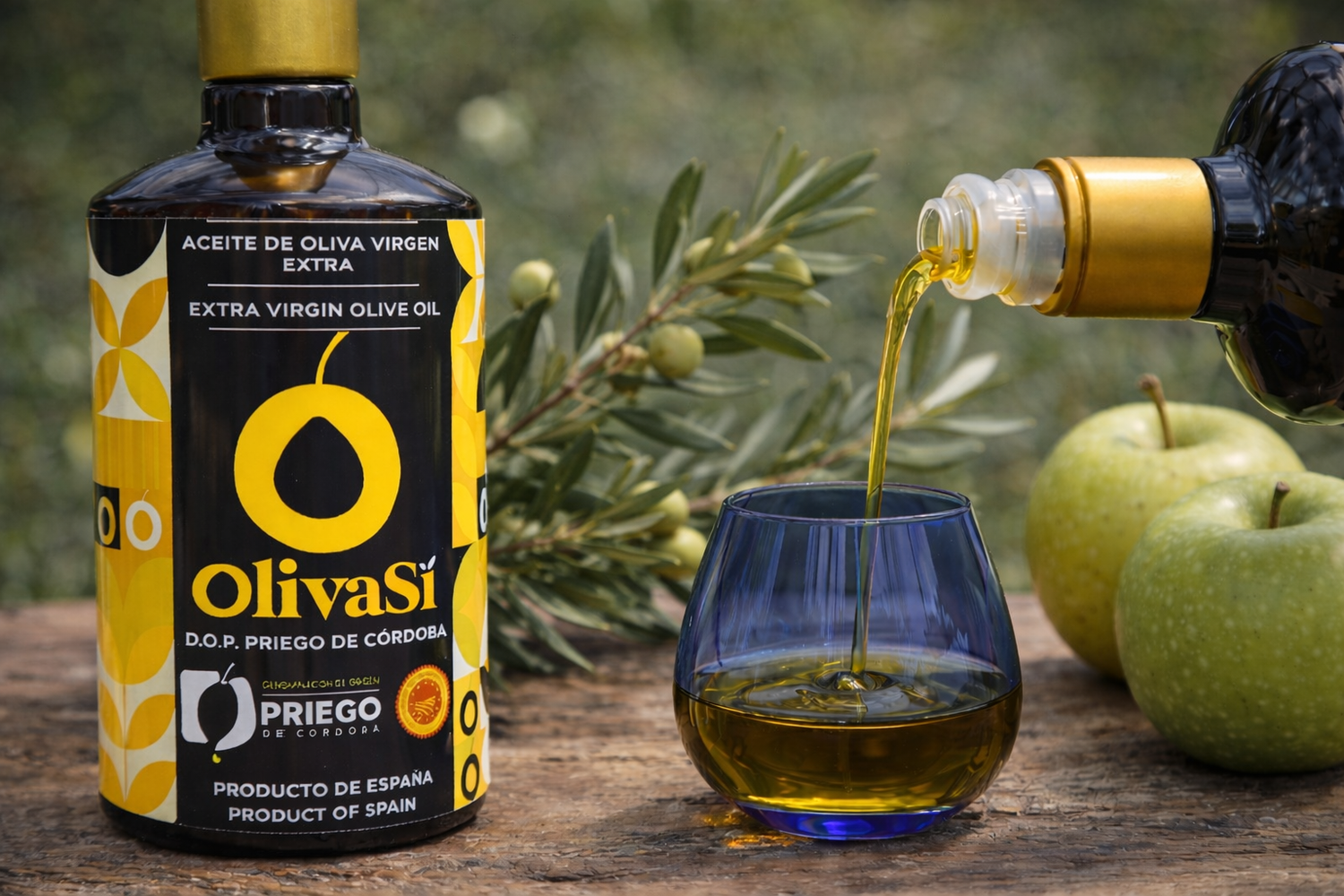
Glasses: small, glass; preferably not too wide. If they are opaque or colored, even better, so the color doesn't limit you.
-
Quantity: about 15 ml (a “shot”) per oil.
-
Environment: no perfumes, no air fresheners, no strong food nearby, and good lighting.
-
Temperature: The oil should be lukewarm (around 26–28°C). Simply hold the glass in your hand to warm it slightly.
If you are going to taste several oils, start with the mildest and finish with the most intense or spicy ones so as not to overwhelm the palate.
How to taste extra virgin olive oil step by step
1. Heat the glass and concentrate the aromas
-
Pour the oil into the glass.
-
Hold it with the palm of your hand.
-
Cover the top with your other hand and give it a small twist so that the oil "dances" along the sides.
This raises the temperature and helps the aromas to concentrate.
2. Smell the oil
-
Uncover the glass just before smelling.
-
Bring your nose close and take several gentle breaths.
-
Ask yourself: Does it remind me of grass, tomato, fruit, nuts…? Or do I notice something strange, like dampness, vinegar, or something “old”?
There are no wrong answers: any association that comes to mind (garden, field, fruit, storage room…) is useful.
3. Taste it
-
Take a small sip.
-
Spread the oil all over your mouth.
-
Take a little bit of air in (it will make noise, that's normal).
Look at:
-
How it enters (gentle or intense).
-
How bitter you taste.
-
How spicy do you feel in your throat?
-
How long the taste lasts after swallowing (persistence).
4. Take notes and compare
If you want to do it right, write down the following on a simple card for each oil:
-
Fruity, bitter and spicy intensity (low, medium, high).
-
Aromas that it suggests to you.
-
If you think it's ideal for toast, salads, fish, etc.
In our Oliva Sí tastings we use easy-to-use cards so that anyone can describe the oil, even if it's their first time.
How to recognize a good EVOO (and detect a bad one)
Positive attributes
A quality extra virgin olive oil is recognized by:
-
Clean and fresh aromas (grass, tomato, fruit, almond, leaf…).
-
Pleasant and balanced bitterness and spiciness, never aggressive.
-
A clean feeling in the mouth, without heaviness.
-
A taste that remains for a few seconds after swallowing.
Common defects
If the oil reminds you of:
-
Old nuts or used frying oil → rancid.
-
Humidity, mold, storage room → humidity/mold.
-
Vinegar, sour wine → vinegary.
This is not a good extra virgin olive oil, even if the label says so.
Typical mistakes when tasting olive oil
-
Judging by color alone: a very green oil is not always better; that's why dark glasses are used in professional tastings.
-
Having eaten or drunk something very strong just before (coffee, wine, chewing gum, garlic, etc.): alters perception.
-
Conduct the tasting in an environment full of smells (perfumes, strong cooking, air fresheners): they mask the oil.
If you pay attention to these details, the experience changes completely.
Extra virgin olive oil tastings with Oliva Sí
Tasting at home is great to start with, but a guided tasting accelerates your learning tremendously: in one session you understand what a great EVOO really is, how to read labels and how to choose oil intelligently.
At Oliva Sí we organize extra virgin olive oil tastings for:
-
Groups of friends and families.
-
Companies (team building, client events, training).
-
Tailor-made events.
In our tastings you will learn to:
-
Differentiating a flat oil from a quality extra virgin olive oil.
-
Recognize fruity, bitter, spicy notes and possible defects.
-
Knowing which oil to use for each dish.
If you're interested in organizing a tasting, you can request a no-obligation quote by indicating the number of people in your group, the approximate date, and the type of event. We'll tailor the experience to the group's level and interests.