
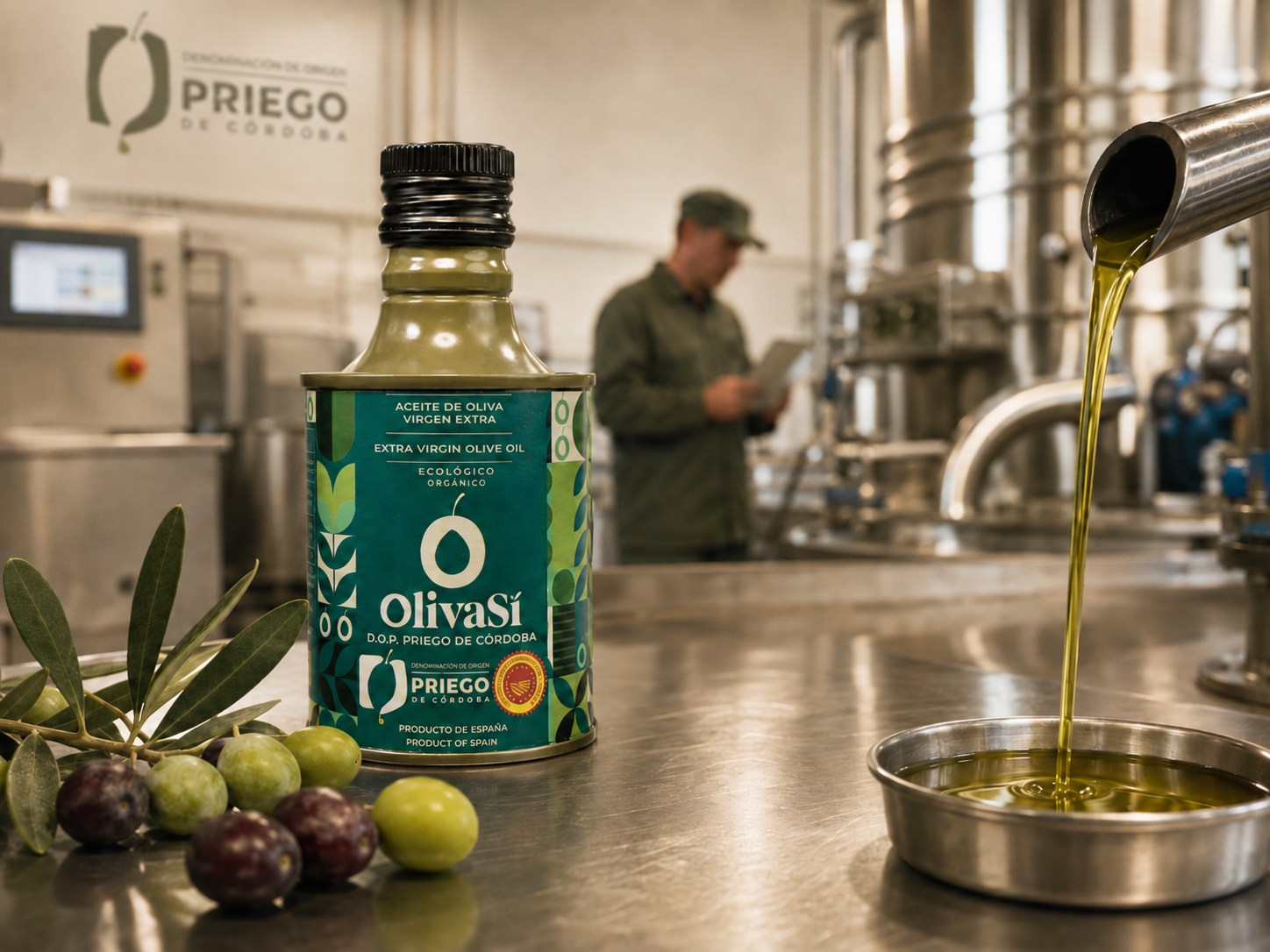
The simple guide to understanding how EVOO is made and what to look for before buying it
The phrase “cold extraction” appears on many olive oil bottles, but it's not always correctly understood.
It means that the oil has been separated from the olive paste while keeping the process temperature below 27°C. This control helps to better preserve the aromas and sensory profile of the oil.
However, cold extraction alone does not guarantee that an oil is of the highest quality. The condition of the olives, the speed of milling, cleanliness, storage, and preservation also play a role.
What cold extraction exactly means
After harvesting, the olives are cleaned, milled, and turned into a paste.
This paste is then beaten to bind the small oil droplets and facilitate their separation. In modern mills, this separation is usually done by centrifugation.
When the process is kept below 27°C, the indication “cold extraction” can be used.
Why temperature affects oil
As the temperature increases, the oil separates more easily, and more can be obtained. However, excessive heat can lead to the loss of volatile aromas.
Cold extraction seeks a balance between:
-
Preserving aromas.
-
Maintaining fruitiness.
-
Protecting sensory quality.
-
Achieving an adequate yield.
It does not mean that the olives are cold, but that the temperature is controlled during production.
How olive oil is currently obtained
Most modern oils are not made with old presses.
The usual process is:
-
Harvesting and selection of olives.
-
Cleaning of the fruit.
-
Milling.
-
Beating of the paste.
-
Separation by centrifugation.
-
Storage and packaging.
Temperature is especially controlled during beating and separation.
Cold extraction and first cold pressing are not the same
These terms describe different methods.
-
First cold pressing: uses traditional hydraulic presses.
-
Cold extraction: typically uses centrifugation or percolation.
In both cases, the temperature must be kept below 27°C, but in modern mills, it is customary to refer to cold extraction.
Is a cold-extracted oil always extra virgin?
No.
Cold extraction describes a process condition. Extra virgin olive oil, on the other hand, is a quality category.
To be EVOO, the oil must meet chemical and sensory controls, be fruity, and have no defects.
An oil may have been extracted at a low temperature and still present problems if:
-
The olive was damaged.
-
The fruit was stored for too long.
-
There was fermentation.
-
The process or storage was inadequate.
Therefore, cold extraction is positive, but not sufficient on its own.
What factors are as important as temperature
To obtain good EVOO, it is also essential to:
-
Harvest healthy olives.
-
Choose the right harvest time.
-
Mill the fruit quickly.
-
Keep machinery clean.
-
Protect the oil from light, air, and heat.
-
Use appropriate packaging.
Quality begins in the olive grove and must be maintained all the way to the bottle.
How it affects aroma and flavor
Temperature control helps to better preserve the natural aromas of the olive.
Depending on the variety and ripeness, the oil may evoke:
-
Freshly cut grass.
-
Olive leaf.
-
Tomato.
-
Apple.
-
Banana.
-
Green almond.
Cold extraction does not create these aromas. It helps to protect those that the fruit already possesses.
Does cold-extracted mean the oil will be intense?
Not necessarily.
A cold-extracted oil can be mild, balanced, or intense. Its profile depends mainly on the variety, harvest time, region, and condition of the olives.
Bitterness and pungency can be positive attributes, but they are not solely determined by temperature.
How to know if an oil has been cold extracted
Look for phrases on the label such as:
-
"Cold extraction."
-
"Cold extracted."
Additionally, it is advisable to check:
-
That it clearly states “extra virgin olive oil.”
-
The origin.
-
The harvest year, when available.
-
The best-before date.
-
The type of packaging.
-
Storage recommendations.
Cold extraction is useful information, but it should be evaluated along with all other information.
Common myths about cold extraction
“First cold pressing is always better.”
No. They are different methods, and modern centrifugation allows for the production of high-quality oils.
“Cold extracted automatically means premium EVOO.”
No. Temperature is only one part of the process.
“All modern oil is pressed.”
No. Centrifugation is primarily used today.
“The lower the temperature, the better.”
Not always. Too low a temperature can make extraction difficult. The important thing is to maintain an adequate technical balance.
Point of interest: follow the olive's journey
When you read “cold extraction,” imagine this journey:
Healthy olive → milling → controlled beating → centrifugation → storage → bottle.
Temperature matters, but quality can be lost at any of these stages.
Therefore, the best question is not just whether the oil has been cold-extracted, but whether the entire process has been properly cared for.
Frequently asked questions about cold extraction
What does cold extraction mean in olive oil?
It means that the oil has been separated from the olive paste by centrifugation or percolation at a temperature below 27°C.
Is cold extraction the same as first cold pressing?
No. First pressing uses traditional presses; cold extraction typically uses centrifugation.
Is a cold-extracted oil always EVOO?
No. It must also meet the chemical and sensory requirements of the extra virgin category.
Does cold extraction better preserve flavor?
It can help to better preserve the aromas and fruitiness, provided the olives are of good quality and the process is carried out correctly.
Does cold extraction produce less oil?
It can reduce yield compared to higher temperatures, although it depends on the variety, ripeness, and technology used.
Can you cook with cold-extracted oil?
Yes. It can be used both raw and for cooking. The term indicates how it was made, not how it should be consumed.
Conclusion: temperature matters, but it doesn't explain everything
Cold extraction indicates that the oil has been obtained below 27°C, helping to better preserve its aromas and sensory qualities.
But a great EVOO also needs healthy olives, rapid milling, production control, proper storage, and protection from light, air, and heat.
At Oliva Sí, we present the culture of EVOO clearly and honestly, valuing the origin, the selection of the fruit, and every decision that brings the taste of the olive grove to the bottle.