


If you have searched for “olive oil for the brain” or “olive oil and memory”, you will have found all sorts of things: bold headlines, eye-catching percentages and promises that sound too good to be true. At Oliva Sí we prefer to tell it like it is. In this guide we separate what is known from what isn't, explain what is really inside a good extra virgin olive oil (EVOO) and give you practical ideas to enjoy it every day.
First things first: what can be claimed (and what can't)
In the European Union, any message linking a food to health must be expressly authorised after a scientific assessment by the European Food Safety Authority (EFSA). It is a safeguard for you as a consumer: it stops every brand from promising whatever suits it.
So, as of today there is no authorised health claim linking olive oil to the brain, memory or cognitive function. That is why you won't read here that EVOO “improves memory” or “protects neurons”. Anyone who says so is going beyond what the evidence and the rules allow.
What is authorised for olive oil are two specific claims, which have nothing to do with the brain but with blood lipids:
- Replacing saturated fats with unsaturated fats in the diet contributes to the maintenance of normal blood cholesterol levels.
- Olive oil polyphenols contribute to the protection of blood lipids from oxidative stress; the beneficial effect is obtained with a daily intake of 20 g of an oil containing at least 5 mg of hydroxytyrosol and its derivatives per 20 g.
And one idea worth always keeping in mind: extra virgin olive oil is a food, not a medicine.
The Mediterranean diet and the brain: a much-studied field
The Mediterranean diet is one of the most researched eating patterns in the world, including in relation to the brain. And EVOO is its reference fat: the oil used to dress salads, cook stews and dip bread across much of southern Europe.
That said, those studies need to be read carefully:
- What is studied is a whole pattern, not an isolated ingredient. The Mediterranean diet includes vegetables, fruit, pulses, whole grains, nuts, fish, little processed meat… and also ways of living: eating together, cooking at home, moving every day.
- Many studies are observational. They find associations between habits and outcomes, but that does not prove that a specific food is the cause.
- No single food, on its own, wards off disease. Health depends on many factors: your diet as a whole, rest, physical activity, genetics and medical care.
The honest thing, then, is to say that EVOO is part of a highly valued and widely studied eating pattern, and that science keeps researching. What isn't honest is turning that research into promises about memory or the brain.
What is inside a good extra virgin olive oil
What we can tell you with complete peace of mind is what an EVOO contains and why it is not the same as other oils.
Mechanical means only
Extra virgin olive oil is obtained solely by mechanical processes, without solvents or refining. It is, quite literally, olive juice. To carry that category it must also have a maximum legal acidity of 0.8 % and pass a sensory analysis in which it may show no defects.
Plain “olive oil” (labelled “composed of refined olive oils and virgin olive oils”) is a blend with refined oil, which loses much of its aroma, flavour and minor compounds.
Its composition, in a nutshell
- Oleic acid: the main fatty acid in EVOO, around 70–80 %. It is a monounsaturated fat.
- Polyphenols: such as hydroxytyrosol, oleocanthal and oleuropein. They are largely responsible for the bitterness and pungency you notice when tasting it.
- Vitamin E: naturally present in the oil.
- Energy: like all fats, it provides 9 kcal per gram, about 120 kcal per tablespoon. It is a food to enjoy as part of a balanced diet.
Pungency and bitterness: a good sign of freshness
If, when tasting an EVOO, you notice a slight bitterness on the palate and a peppery tickle in the throat, it is not a defect: these are positive attributes in tasting, linked to its polyphenol content and the oil's freshness. A flat oil with no nuances at all is usually milder, older or less well stored.
How to use EVOO every day
The best way to make the most of a good oil is simply to use it. A few ideas:
- At breakfast: a drizzle over toast with grated tomato. A classic that never fails.
- Raw: salads, gazpacho, salmorejo, vegetable soups or a carpaccio. This is where its aromas shine.
- For cooking: EVOO is very heat-stable and works for sofrito, stews, griddling, roasting and even home frying without going past its smoke point.
- To finish dishes: a thread of raw oil over roasted vegetables, pulses, fish or a freshly made rice transforms the dish.
- In baking: sponge cakes, muffins or olive oil tortas, replacing butter.
And if you want to follow the spirit of the Mediterranean diet, the key is not a “magic” spoonful but the whole picture: make EVOO your everyday fat and pair it with vegetables, pulses, fruit, nuts and fish.
How to choose and store a good EVOO
What to look for on the label
- “Extra virgin olive oil”: the top category. If it just says “olive oil”, it is not an extra virgin.
- Origin and Protected Designation of Origin (PDO): a PDO guarantees where the olives come from and specific quality controls by its Regulatory Council.
- Varieties: Picual, Hojiblanca, Picuda… each brings a different flavour profile. A blend (coupage) combines several for balance.
- Best-before date and batch: the more recent the oil, the better it will keep its aromas.
- Packaging: dark glass or tins are best, as they protect from light.
How to store it
Oil has four enemies: light, heat, oxygen and time. Keep it in a cool, dark cupboard away from the hob and the window, close the bottle tightly after each use and use it up at a good pace once opened. Poorly stored oil oxidises, loses its aromas and develops a rancid defect.
Our oil: Golden Edition PDO Priego de Córdoba
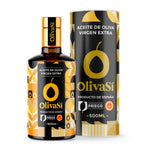
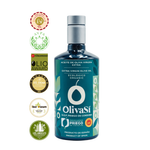
Our Golden Edition is an extra virgin olive oil with PDO Priego de Córdoba, a blend of Hojiblanca, Picuda and Picual. An oil made to be enjoyed raw and in everyday cooking. And if you prefer opaque packaging, there is the Golden Edition in a 500 ml tin.
An EVOO for your everyday table
Golden Edition, extra virgin olive oil PDO Priego de Córdoba.
Discover Golden EditionFrequently asked questions
Is extra virgin olive oil good for memory?
There is no authorised health claim in the EU linking olive oil to memory or the brain. The Mediterranean diet, of which EVOO is the main fat, is widely studied, but that does not allow an effect on memory to be attributed to any specific food.
How much olive oil is used in the Mediterranean diet?
There is no single figure: EVOO is used as the main fat for dressing and cooking. As a reference, the authorised claim on olive oil polyphenols refers to a daily intake of 20 g (just under two tablespoons) of an oil containing at least 5 mg of hydroxytyrosol and its derivatives per 20 g. Remember that one tablespoon provides about 120 kcal.
Can you cook with EVOO?
Yes. Extra virgin olive oil is heat-stable and an excellent choice for stewing, griddling, roasting or frying, as long as you don't let it smoke.
What does it mean when an oil is peppery or bitter?
These are positive attributes in official tasting, related to polyphenols and the freshness of the oil. It is not a defect but a hallmark of many good extra virgin oils.
This article is for general information and does not replace the advice of a health professional.


