
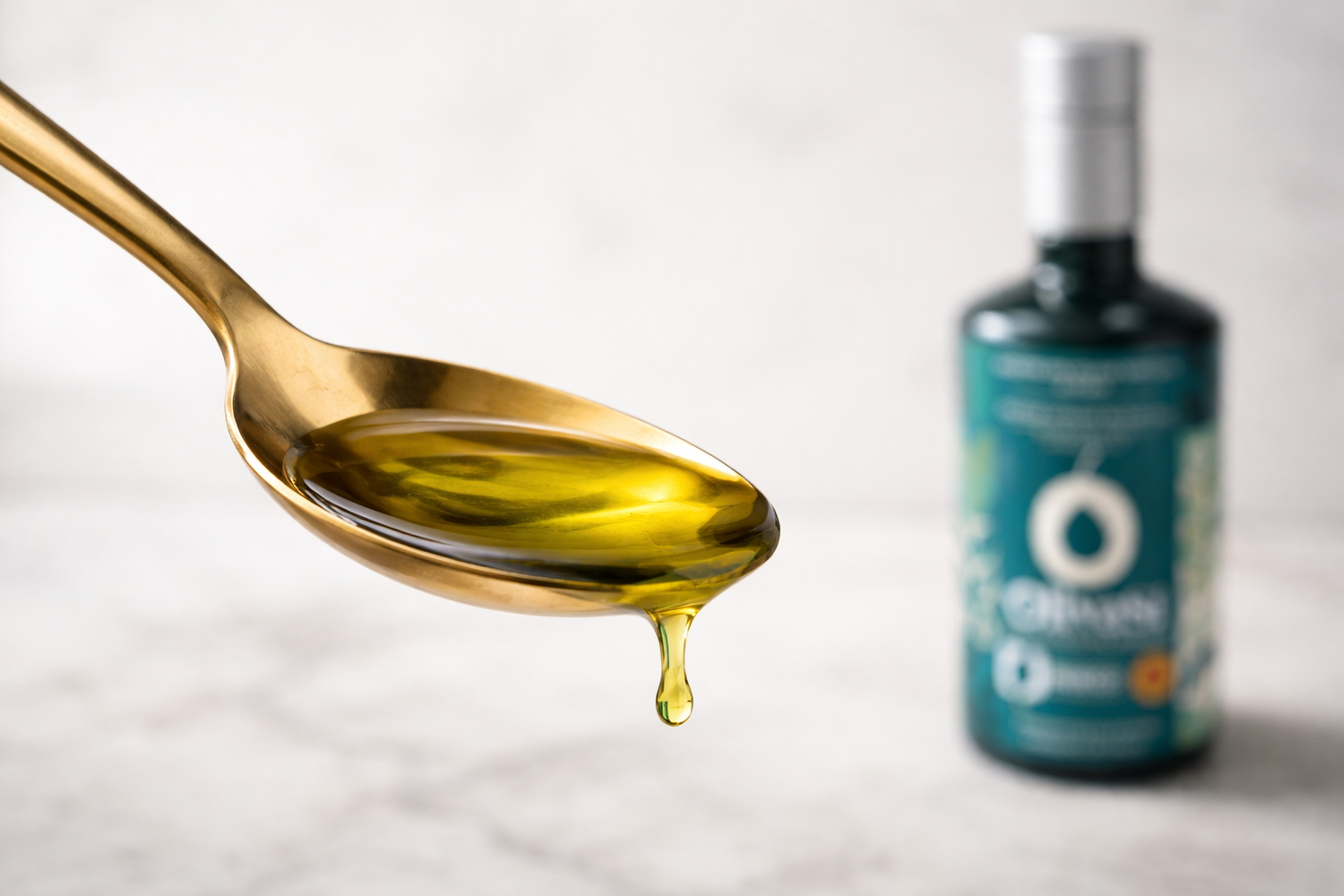
Daily Olive Oil Consumption: How Much Is Enough and When Is It Best?
You know olive oil is good for you. You say it, you believe it, and you probably use it every day. But do you know exactly how much you need to consume for it to truly make a difference to your health? Most people use too little or spread it incorrectly throughout the day. In this article, we’ve compiled information from the European Union, EFSA, the PREDIMED study, and Harvard to give you the most precise and useful answer possible.
The quick answer: minimum, optimal, and maximum doses according to science
MINIMUM recommended (EFSA/EU): 20 g/day = 2 tablespoons
OPTIMAL endorsed by PREDIMED: 40 ml/day = 4 tablespoons
MAXIMUM advised: 50 ml/day = 5 tablespoons
On an empty stomach (optional): 1 tablespoon upon waking
Calories per tablespoon: ~120 kcal | 9 kcal per gram
Always EXTRA VIRGIN olive oil (EVOO) for full benefits
There are two key thresholds worth knowing: the minimum established by the European Union for the oil to have an effect on your health (20 grams per day), and the optimal amount demonstrated by the doctors in the PREDIMED study to obtain all documented benefits (40 milliliters per day). Below the minimum, the impact on your health is very limited. Above the maximum, the caloric excess can unbalance the diet without providing additional benefits.
Why quantity matters: the EU and EFSA regulatory framework
Extra virgin olive oil does not work like a single-dose medication. Its beneficial compounds, especially polyphenols, need to reach a minimum concentration in the body to exert their protective effect. Below that concentration, the benefit is marginal. Above the advised maximum, the caloric excess can be counterproductive.
Regulation 432/2012 of the European Commission states that the beneficial effect of olive oils is obtained with a minimum daily intake of 20 grams of EVOO, provided that this amount contains at least 5 mg of hydroxytyrosol and its derivatives. This amount is equivalent to 2 tablespoons. The EFSA (European Food Safety Authority) supports this recommendation and also recognizes the effect of EVOO on the regulation of fasting blood triglycerides (opinion 2011).
Minimum effective (20 g = 2 tablespoons): From this amount, you get the antioxidant effect on blood lipids and the basic cardioprotective effect. Established by the EU and EFSA. Equivalent to dressing a generous salad or having toast with a good drizzle for breakfast.
Documented optimal (40 ml = 4 tablespoons): The amount used by researchers in the PREDIMED study, which showed reductions of 30% in cardiovascular risk, improved cognitive function, and prevention of diabetes.
Maximum advised (50 ml = 5 tablespoons): The amount recommended in the CordioPrev study for patients with a previous heart attack, which showed a 28% reduction in relapses. Above this amount, additional benefits are not documented, and the caloric excess can be counterproductive if not compensated with physical exercise.
"We advised those people to consume about 50 milliliters per day, about 5 tablespoons of extra virgin olive oil per day. Over time, we have found that the optimal amount is around 4 tablespoons." — Dr. Ramon Estruch, coordinator of the PREDIMED study
Recommended dose according to your profile and personal situation
The optimal amount can vary depending on your personal situation, physical activity level, and health goals. This table summarizes the most relevant recommendations:
Healthy adult (maintenance): 20-40 ml/day (2-4 tablespoons). EFSA Minimum: 20 g. PREDIMED Optimal: 40 ml.
Person with cardiovascular risk: 40-50 ml/day (4-5 tablespoons). According to PREDIMED and CordioPrev. Always EVOO.
Person watching weight: 20-30 ml/day (2-3 tablespoons). Replace other fats, do not add on top.
Over 60 years old: 30-40 ml/day (3-4 tablespoons). Cognitive and cardiovascular protection.
On an empty stomach (optional): 5-15 ml (1 tablespoon). No evidence of greater benefit by time of day.
Children (8-12 years old): 10-20 ml/day (1-2 tablespoons). Proportional to weight and total calories.
Important: these amounts include all oil consumed during the day, whether raw, cooked, in sautéed dishes, or fried. They are not additional amounts to add on top of your usual consumption.
Olive oil calories: how many does each tablespoon provide?
Olive oil, like all fat, provides 9 kcal per gram. This is a high figure that causes concern, but studies show that moderate consumption of EVOO not only does not lead to weight gain but can promote weight control. The key: replace other less healthy fats, do not add on top of your diet.
1 teaspoon (~5 ml / ~4.5 g): ~40 kcal. Final touch raw, on an empty stomach.
1 tablespoon (~15 ml / ~13.5 g): ~120 kcal. Dressing a salad, toast.
2 tablespoons (~30 ml / ~27 g): ~240 kcal. Minimum effective dose.
4 tablespoons (~40 ml / ~37 g): ~330 kcal. Optimal health dose.
5 tablespoons (~50 ml / ~46 g): ~415 kcal. Upper recommended limit.
100 ml (~90 g): ~824 kcal. Nutritional labeling reference.
"People who followed a Mediterranean diet with extra virgin olive oil, despite consuming more calories than the control group, did not gain weight. On the contrary, a tendency to lose weight and reduce waist circumference was observed." — Summary of the PREDIMED study
Active compounds in EVOO and why you need the minimum dose
The benefits of extra virgin olive oil do not come from its caloric capacity or its fats alone: they come from its bioactive compounds, which are only present in sufficient concentration in quality EVOO and require a minimum daily amount to exert their protective effect.
Oleic acid (omega-9): Monounsaturated fat that reduces LDL and protects arteries. Makes up 70-80% of EVOO.
Oleocanthal: Natural anti-inflammatory (similar effect to ibuprofen). Eliminates beta-amyloid plaques from the brain.
Hydroxytyrosol: Main antioxidant in the oil. Protects cellular DNA and LDL from oxidation. 5 mg/day = 20 g of EVOO (Reg. EU 432/2012).
Oleuropein: Protects blood vessels. Antiviral and antimicrobial properties. Higher concentration in early harvest.
Vitamin E (tocopherols): Fat-soluble antioxidant. Protects nerve cells and skin from oxidative damage. Covered with 20-40 ml/day of EVOO.
Squalene: Hydrocarbon with antitumor properties. Protects the skin and improves the immune system.
Key note: these compounds are only found in EXTRA VIRGIN olive oil. The refining process of regular olive oil destroys practically all polyphenols. If you consume refined or blended olive oil, you will not get these benefits.
Documented health benefits by system
With the recommended 4 tablespoons of quality EVOO daily, this is what science has documented happens in your body:
Cardiovascular health: Reduces LDL cholesterol, raises HDL, lowers blood pressure. -30% risk of heart disease. (PREDIMED, Spanish Heart Foundation)
Brain protection: Improves memory, attention, and executive function. -28% risk of dying from dementia. (Harvard 2024, URV 2026)
Alzheimer's prevention: Oleocanthal activates neuronal autophagy that eliminates beta-amyloid plaques from the brain. (Temple University, USA)
Natural anti-inflammatory: Inhibits COX-1 and COX-2 like ibuprofen, without side effects. Reduces chronic systemic inflammation.
Weight control: Satiating effect: reduces appetite and snacking. (PREDIMED, EFSA 2011)
Diabetes prevention: Improves insulin sensitivity. Reduces the risk of type 2 diabetes in at-risk populations. (PREDIMED, CordioPrev)
Digestive health: Stimulates the gallbladder, improves intestinal transit, promotes healthy microbiota.
Reduced risk of depression: Polyphenols promote the production of well-being hormones. (PREDIMED / secondary data)
Antioxidant protection: Neutralizes free radicals that damage DNA. Delays cellular aging. (EU Regulation 432/2012 / EFSA)
Bone health: Improves calcium absorption and bone mineralization. Reduces the risk of osteoporosis.
Key supporting studies:
PREDIMED (Spain, 2013 — N=7,447): The largest nutritional clinical trial for cardiovascular prevention in the world. Showed that the Mediterranean diet with EVOO reduces cardiovascular risk by 30%, improves cognitive function, and prevents type 2 diabetes.
CordioPrev Study (The Lancet): 500 participants with a previous heart attack who followed the Mediterranean diet rich in EVOO experienced 28% fewer relapses. In men, the reduction was 33%.
Harvard T.H. Chan School of Public Health, 2024: N=92,383 people over 28 years: consuming more than half a tablespoon of EVOO daily is associated with a 28% lower risk of dying from dementia. Published in JAMA Network Open.
Universitat Rovira i Virgili (URV) / IISPV, 2026: 656 adults over 2 years: those who consumed EVOO showed better results in memory, attention, and executive function tests, and a more diverse gut microbiota. Published in Microbiome.
Regulation EC 432/2012 / EFSA: The European Union officially recognizes that the consumption of 20 g/day of EVOO with a minimum of 5 mg of hydroxytyrosol contributes to the protection of blood lipids from oxidative damage.
How to distribute the tablespoons throughout the day
The 4 tablespoons do not have to be taken all at once or at a specific time of day. The key is to distribute them naturally throughout all meals.
Breakfast (1 tablespoon = ~15 ml): Whole wheat toast with EVOO and grated tomato. Or directly a tablespoon over coffee with milk in the Andalusian style. This tablespoon can be part of the 'empty stomach ritual' if you prefer.
Lunch (2 tablespoons = ~30 ml): Salad dressing (1 tablespoon) + oil as the base for sautéing or stew (1 tablespoon). This is the easiest way to consume most of the daily dose without changing your cooking habits.
Dinner (1 tablespoon = ~15 ml): Drizzle over vegetables, baked fish, gazpacho, or vegetable cream soup. Raw whenever possible to preserve polyphenols to the maximum.
Optional wildcards: Half a tablespoon over fruit, natural yogurt, or as the base for a vinaigrette. EVOO combines perfectly with acids (lemon, vinegar) which enhance the absorption of its bioactive compounds.
"Extra virgin olive oil should be the main source of fat in the daily diet, replacing butter and less healthy oils." — Cleveland Clinic / Dr. Miguel Angel Martinez Gonzalez, Harvard TH Chan
Olive oil on an empty stomach: truths and myths
No question about EVOO generates as much confusion as consumption on an empty stomach. Social media promotes it as a miracle cure. Science has a more nuanced answer.
What IS documented:
EFSA endorses the effect on fasting triglycerides: In its 2011 opinion, the European Food Safety Authority recognizes the benefit of EVOO on the regulation of blood triglycerides when taken on an empty stomach.
Stimulates the gallbladder and liver: On an empty stomach, without other foods to 'compete', EVOO more directly stimulates bile secretion, which can facilitate fat digestion throughout the rest of the day.
Satiating effect from the first hour: Oleylethanolamide, a compound derived from oleic acid, has a documented satiating effect that can help reduce appetite and snacking during the morning.
Improves the absorption of fat-soluble vitamins: Taken on an empty stomach, EVOO can improve the absorption of vitamins A, D, E, and K from subsequently consumed foods.
What does NOT have solid evidence:
No evidence that taking it on an empty stomach enhances the overall effect of EVOO: The benefits of EVOO come from its regular consumption, not the timing. Taking it on an empty stomach is a good ritual to ensure the dose, but it does not have a documented 'bonus' compared to taking it with meals.
It does not make you lose weight on its own or act as a 'detox': Olive oil is not a magic cleanser or weight loss aid. What it does have is a satiating effect that can help control total intake.
The mixture with lemon has no specific scientific study: Although both ingredients are healthy separately, there is no evidence that their combination on an empty stomach provides additional benefits.
"The benefits for your health will be exactly the same whether you take EVOO on an empty stomach or distribute it in your meals. The important thing is not the ritual: it is the quality of the product and the consistency of consumption." — Aceites Monttosa
What happens if you take too much: calories and real limits
Olive oil is healthy, but not unlimited. Like all fat, it provides 9 kcal per gram. A single tablespoon contains between 120 and 130 calories. If we add 4 tablespoons to our diet WITHOUT replacing other fats, we are adding between 480 and 520 kcal daily, which can unbalance the diet.
Accumulated caloric excess: More than 5-6 tablespoons daily without reducing other fats can generate a caloric surplus that favors long-term weight gain.
Gastrointestinal discomfort: More than 3 tablespoons at once (especially on an empty stomach) can cause nausea, diarrhea, or a feeling of heaviness in people with sensitive stomachs.
Interference with intermittent fasting: A tablespoon provides ~120-130 kcal, which technically breaks the caloric fast. If you practice strict IF, keep this detail in mind.
The golden rule: the recommended 4 tablespoons daily should REPLACE other less healthy fats (butter, margarine, refined seed oils), not add to them. The Mediterranean diet is not 'adding olive oil to what you already eat': it is making EVOO your primary fat source.
How to choose the right EVOO to get its benefits
There's no point in consuming 4 tablespoons daily if the oil you're using isn't the right one.
Mandatory: it must say 'EXTRA VIRGIN' on the label: It is the only oil that retains polyphenols, oleocanthal, hydroxytyrosol, and vitamin E in sufficient concentration. 'Regular' olive oil is mostly refined and has lost almost all these compounds.
Cold extraction (below 27 degrees Celsius): Ensures that the bioactive compounds have not degraded during extraction due to heat. Must appear on the label.
Acidity below 0.8%: The most objective indicator of quality. Below 0.3% is an exceptional oil (early harvest). Above 0.8%, it cannot be called extra virgin.
Early harvest if you seek maximum polyphenols: Early harvest oils (still green olives) have a higher concentration of polyphenols and antioxidants. They are recognized by their intense green color, bitterness, and throat tickle (indicative of oleocanthal).
PDO or trusted brand with traceability: Protected Designations of Origin guarantee strict quality controls. You can also buy directly from a trusted olive mill or cooperative with verifiable origin.
Hermetic dark glass bottle: Polyphenols are very sensitive to light and oxygen. Always buy in dark glass (blue, green, amber) and store in a cupboard away from light and heat.
"It is very important that the oil consumed is extra virgin, as it is much richer in vitamins, oleic acid, and antioxidants. A 'plain' olive oil is fundamentally refined oil with a minimum of virgin." — Agrosegura Aceites / EFSA Regulation 432/2012
Frequently Asked Questions about Daily Olive Oil
Does olive oil make you gain weight if I consume 4 tablespoons a day?
No, if you incorporate it by replacing other less healthy fats. The PREDIMED study showed that participants who consumed 40-50 ml of EVOO per day not only did not gain more weight, but tended to lose weight compared to the low-fat diet group. Key: substitute, don't add on top of your current diet.
Is it better to take it on an empty stomach or with meals?
Science does not support that taking it on an empty stomach enhances its benefits. What it does support is regular consumption distributed throughout the day. If the ritual of a spoonful on an empty stomach helps you remember your daily dose, go ahead. If not, distribute it at breakfast, lunch, and dinner with the same effect.
What is the difference between olive oil and extra virgin?
'Regular' olive oil is a mixture of refined oil with a minimum percentage of virgin oil. The refining process destroys almost all polyphenols and antioxidants. To obtain the benefits described in this article, you absolutely need EXTRA VIRGIN olive oil (EVOO). The label must say exactly that.
Can I fry with those 4 tablespoons or are they only for raw consumption?
The 4 tablespoons include all uses for the day: raw, cooked, and frying. EVOO is heat stable and has the highest smoke point among healthy oils. For frying, use pomace oil or a more economical EVOO. Reserve the best quality EVOO for raw consumption, where it retains more polyphenols.
How much olive oil per day to lower cholesterol?
The EFSA sets the minimum at 20g/day for the antioxidant effect on lipids. For a full cardiovascular effect, studies suggest 40ml/day as part of a Mediterranean diet. The effect is not immediate: studies measure improvements after weeks or months of regular consumption.
Are there contraindications to consuming olive oil daily?
There are no recognized contraindications for moderate consumption of EVOO. People with obesity or under dietary treatment should adjust the amount with their doctor, as oil provides dense calories. In excess (more than 5-6 tablespoons daily), it can cause digestive discomfort and caloric surplus.
From how many tablespoons does olive oil have an effect?
The European Union sets the minimum at 20 grams daily (2 tablespoons) for the antioxidant effect on blood lipids. From there, benefits increase with quantity up to the optimal 40 ml (4 tablespoons). Below 2 tablespoons daily, the documented health effect is minimal.