
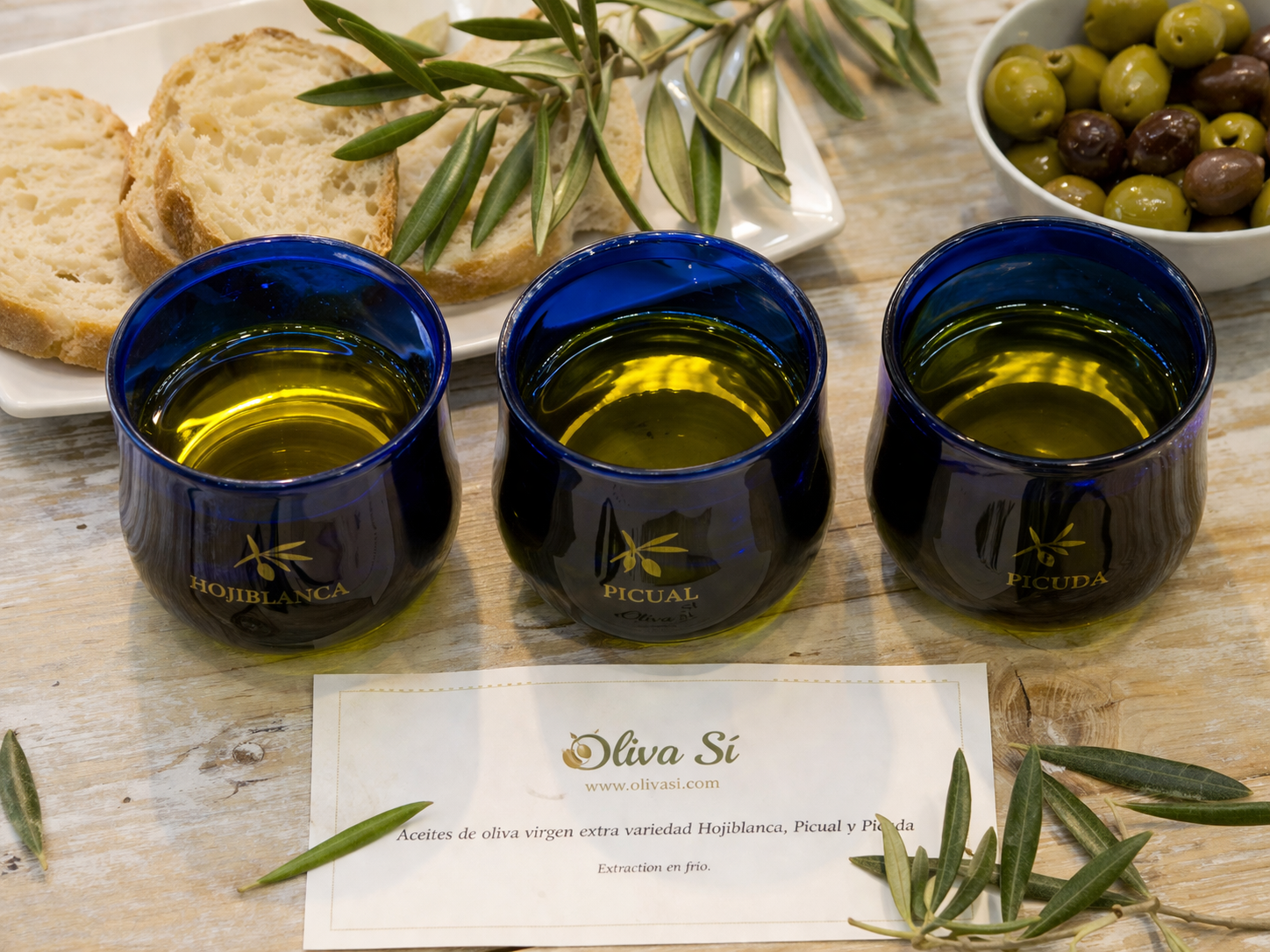
How to choose according to taste, aroma, and use
If you're torn between Hojiblanca, Picual, and Picuda, the answer isn't which is "better," but which fits best with your cooking style and the flavors you enjoy. Picual is usually more intense and stable, Hojiblanca stands out for its balance and freshness, and Picuda shines with its aromatic profile and a sweeter initial taste.
Quick guide: Hojiblanca vs. Picual vs. Picuda
|
Variety |
Flavor Profile |
Bitterness / Pungency |
Best Use |
Ideal for |
|
Hojiblanca |
Fresh, herbal, with almond and apple notes |
Medium, balanced |
Raw, salads, toasts, dressings |
Those seeking a versatile EVOO |
|
Picual |
Intense, green, with tomato vine and leafy notes |
Medium-high |
Frying, stews, robust dishes |
Those who want power and stability |
|
Picuda |
Aromatic, smooth initial taste, elegant |
Rounder and gentler |
Bread, vegetables, warm dishes, raw use |
Those seeking a finer, silkier oil |
This comparison summarizes quite well what technical sheets and sector guides indicate: Hojiblanca generally offers a balanced profile, Picual a more potent one, and Picuda a more aromatic and palatable one.
Hojiblanca: balance and freshness
Hojiblanca is a very versatile variety because it has character, yet isn't aggressive. It often evokes fresh grass, artichoke, almond, or green apple, with a pleasant initial taste and a lively, yet balanced finish. This is why it works so well in toasts, salads, mayonnaise, vegetables, fish, and dishes where you want the oil to complement without overpowering everything.
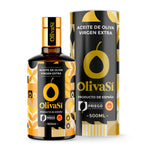
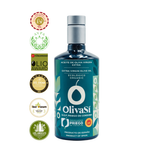
Furthermore, this profile fits especially well with Oliva Sí, whose EVOO is presented as Hojiblanca PDO Priego de Córdoba with notes of artichoke, tomato vine, herbaceous elements, apple, and almond, along with a slightly sweet mouthfeel, with mild bitterness and medium pungency that are well integrated. In other words: an oil with complexity, but very easy to enjoy.
Picual: intensity and strength in cooking
Picual is the most robust option of the three. It usually has a greener, more pronounced profile with a greater sensation of bitterness and pungency. It is associated with notes like tomato vine, olive leaf, fig, or green grass, and precisely because of this personality, it is often recommended for frying, stews, meats, preserves, and strong-flavored dishes.
It is also a highly valued variety for its stability, which explains why it is so often recommended for high-temperature cooking. If you like oils with character and truly want to taste the EVOO in your dish, Picual is usually a safe bet.
Picuda: the most underrated
Picuda deserves more recognition than it usually gets. In official documentation related to Priego de Córdoba, Picudo type oil, made from Picuda olives, is described as fruity, aromatic, pleasant, and with a sweet initial taste. This detail of the sweet initial taste marks an important difference compared to Picual.
Where does it shine most? Especially raw, with bread, vegetables, warm dishes, or recipes where you want an elegant oil, with aroma, but without an excessive kick. It is a very interesting variety for those seeking nuances without going for the most intense profile.
So, which one to choose?
Here's the practical version:
-
Choose Picual if you want a powerful oil that's excellent for cooking.
-
Choose Hojiblanca if you're looking for balance and a very versatile EVOO.
-
Choose Picuda if you prefer a more aromatic, gentle, and refined profile.
There isn't an absolute winner. The smart thing to do is choose based on your use and personal taste. In fact, the industry itself insists that there isn't one single ideal variety for all dishes.
And if you combine them, that's called a coupage
When an oil is made from a single variety, we call it monovarietal. When it's made by blending two or more varieties, we call it a coupage. The goal isn't to blend just for blending, but to seek a more rounded, balanced, or gastronomic profile.
That's why, while comparing Hojiblanca vs. Picual vs. Picuda makes perfect sense, so does thinking about how they complement each other. And even then, when a variety is well-produced on its own, it doesn't need much more. That's where a well-made Hojiblanca, like Oliva Sí's, has a significant advantage: it has freshness, structure, aroma, and a very clear personality from the first sip.
Conclusion
If you like a more robust oil, go for Picual. If you prefer balance and versatility, Hojiblanca makes it easy. And if you're looking for a more aromatic, gentle, and elegant profile, Picuda is an option that deserves much more attention. And when you combine several in the same bottle, remember the name: coupage.